Poker has evolved from a casual card game into a highly strategic competitive discipline where decision-making, probability, psychology, bankroll management, position, and opponent analysis all influence long-term results. For players who want to improve beyond simply learning the rules, structured poker education can provide a much more efficient path to developing practical skills.
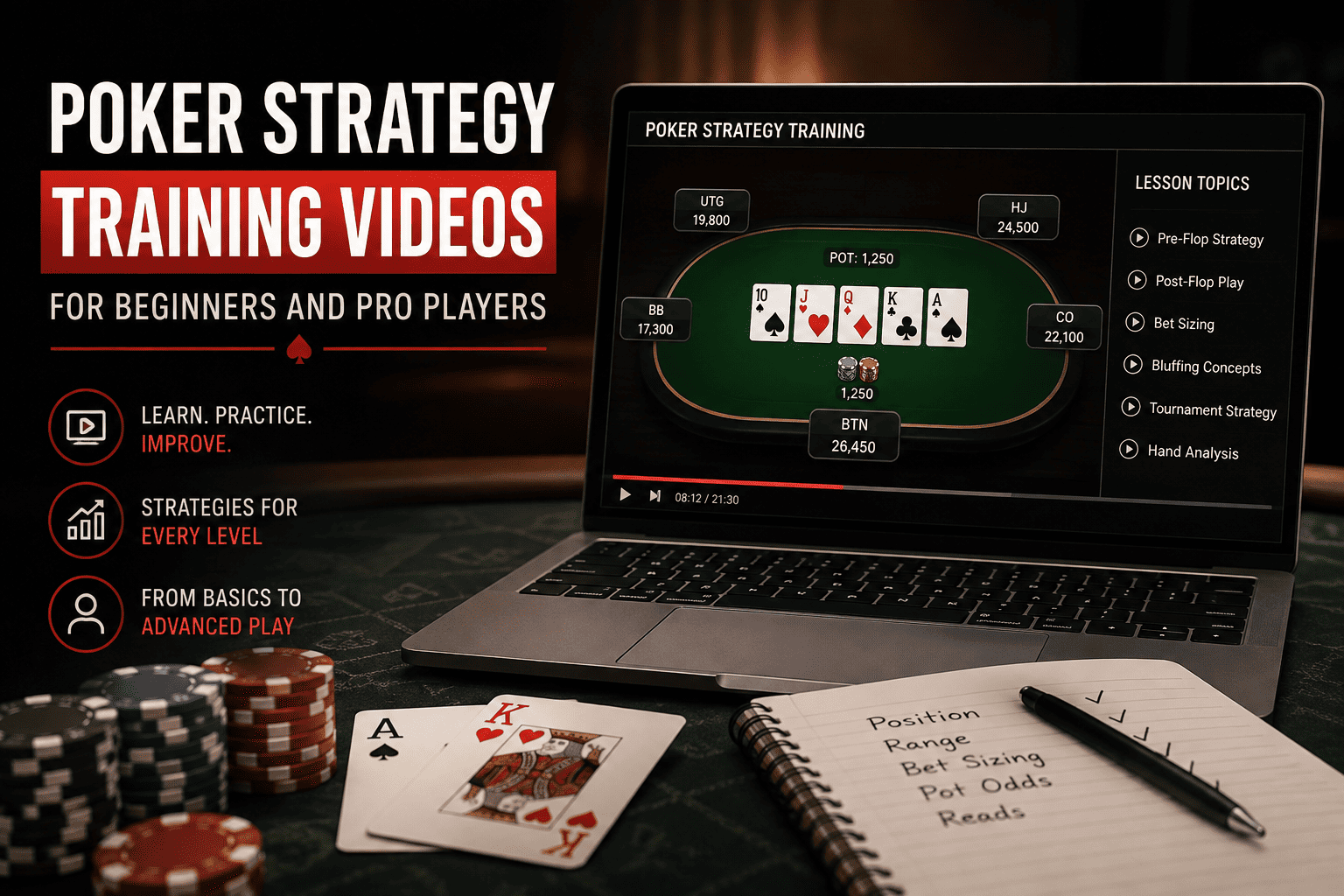
Poker strategy training videos are particularly useful because they allow players to study real situations, pause important decisions, review betting patterns, and understand why a particular action is considered profitable or unprofitable. Instead of memorising isolated poker tips, players can learn how different concepts connect across an entire hand.
For beginners, video-based learning can establish the fundamentals required to play confidently. For experienced and professional players, advanced training material can help refine weaknesses in areas such as range construction, continuation betting, pot control, bluff selection, tournament strategy, and exploitative play.
Players in Gurgaon and nearby areas can combine online learning with practical experience by participating in the local poker community and exploring Poker Gurgaon as a destination for understanding the live poker environment. The combination of structured education and responsible practical play can make the learning process considerably more effective.
Why Video-Based Poker Training Is Effective for Learning Strategic Concepts
Traditional poker learning often involves reading rules, studying articles, memorising charts, or discussing hands with other players. These methods remain valuable, but videos provide an additional advantage: they can demonstrate how strategic concepts operate in realistic situations.
A well-produced training video can show the cards, position, stack sizes, betting action, pot size, board texture, and opponent tendencies simultaneously. This allows learners to understand the complete decision-making environment rather than studying one concept in isolation.
For example, understanding why a player raises from the button requires more than knowing that raising is generally profitable from late position. A detailed lesson can demonstrate how position affects the range of hands a player can open, how the blinds respond, how stack depth changes the strategy, and how the plan develops after the flop.
This visual and contextual approach is particularly valuable when studying complicated concepts such as implied odds, equity realisation, range advantage, blockers, balanced ranges, and expected value.
How Training Videos Help Beginners Build a Strong Foundation
New players frequently make the mistake of trying to learn advanced strategies before developing a reliable understanding of fundamental poker mechanics. Training videos can solve this problem by presenting concepts in a logical progression.
A beginner should initially understand hand rankings, betting structures, positions, blinds, pot sizes, basic probabilities, and common terminology. Once those concepts are comfortable, the player can progress towards pre-flop decision-making, post-flop strategy, betting patterns, and opponent analysis.
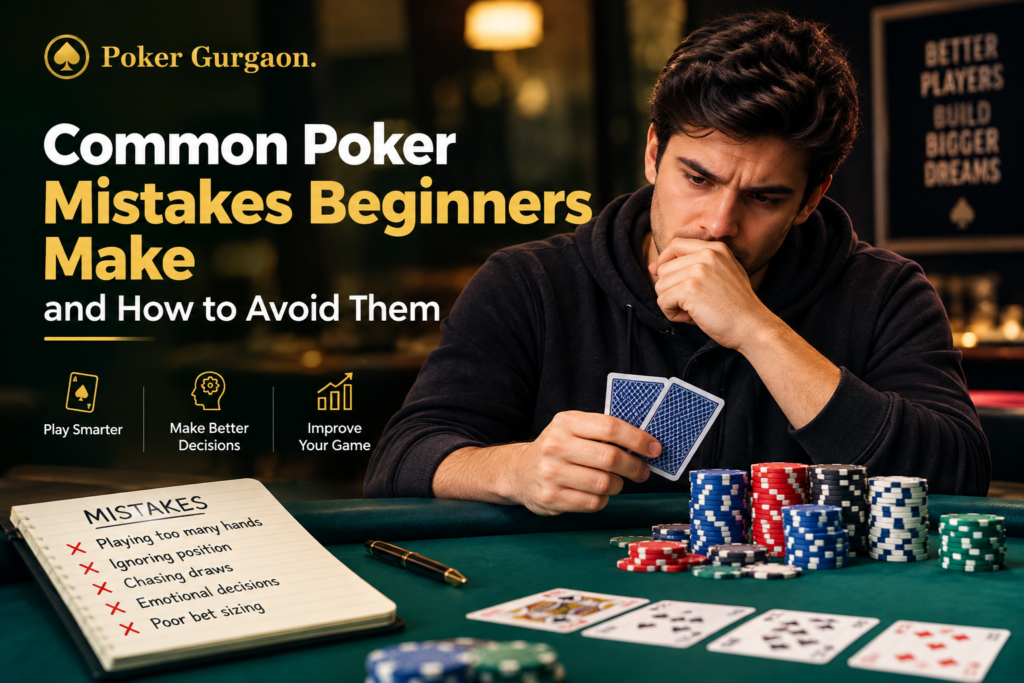
A structured video course can also demonstrate common mistakes that beginners make. Seeing an example of excessive calling, unnecessary bluffing, playing too many starting hands, or ignoring position can make the consequences easier to understand than a short written explanation.
Understanding the Basic Texas Hold’em Rules Before Studying Advanced Strategy
Before analysing advanced strategy, every player should have a reliable understanding of the basic texas holdem rules. Texas Hold’em uses a standard 52-card deck, with players receiving two private hole cards and up to five community cards being placed face-up on the table.
The game generally progresses through four betting rounds: pre-flop, flop, turn, and river. During each stage, players make decisions based on their private cards, community cards, position, previous betting action, and their assessment of opponents’ possible holdings.
The objective is to construct the strongest possible five-card poker hand using any combination of the player’s hole cards and the community cards. However, winning a hand does not always require having the strongest cards. A player can also win when opponents fold after facing a strategically convincing bet.
The Pre-Flop Stage and Its Strategic Importance
Pre-flop is the first major decision point in Texas Hold’em. Players receive two hole cards before any community cards are revealed. The strength of the starting hand, table position, stack depth, number of opponents, and previous action all influence whether a player should fold, call, or raise.
A common beginner mistake is evaluating starting hands without considering position. A hand that may be playable from a late position can become difficult to manage from an early position because several opponents remain to act.
Training videos can demonstrate this difference through repeated examples, allowing players to recognise how the same starting hand can have different strategic value depending on where the player sits.
The Flop, Turn, and River Require Different Decisions
After the pre-flop betting round, three community cards are revealed on the flop. This is where players must reassess their hand strength, potential draws, range advantage, and opponent tendencies.
The turn introduces another community card and frequently changes the mathematical and strategic dynamics of the hand. Betting sizes can become more significant because the pot is generally larger, while draws and made hands may become easier to identify.
The river is the final community card. At this point, players must decide whether to value bet, bluff, check, call, or fold based on the final board, their perceived range, and the opponent’s likely range.
High-quality instructional videos can break down these stages individually and explain how an initial pre-flop decision develops into a complete post-flop strategy.
Poker Strategy for New Players: The Most Important Concepts to Learn First
Developing poker strategy for new players should focus on making consistently logical decisions rather than trying to win every individual hand. Poker contains substantial short-term variance, meaning even a strategically strong decision can produce a losing result.
The objective is therefore to improve the quality of decisions over a large sample of hands.
Start With Tight and Position-Aware Pre-Flop Selection
One of the simplest improvements for a beginner is becoming more selective with starting hands. Playing too many weak hands creates difficult post-flop situations and increases the likelihood of making marginal decisions.
Position should be considered alongside hand strength. Players acting later have more information because they can observe what opponents have done before making their own decision. This informational advantage can make late-position hands more profitable.
A good training programme should therefore explain opening ranges, calling ranges, three-betting concepts, blind defence, and the strategic differences between early, middle, and late positions.
Learn Why Position Creates a Strategic Advantage
Position is one of the most important concepts in poker because acting later provides additional information. A player in position can observe an opponent’s action before deciding whether to bet, check, raise, or call.
This advantage becomes particularly important in heads-up pots. The player who acts first has to make decisions without knowing the opponent’s response, while the player acting later can use the earlier action as additional information.
Beginner training should therefore treat position as a core strategic principle rather than a technical detail.
Understand Pot Odds and Expected Value
Pot odds help players determine whether calling a bet can be mathematically justified. The concept compares the amount required to call with the potential amount that can be won from the pot.
Expected value goes further by evaluating the long-term profitability of a decision. A decision can have positive expected value even if it loses in the short term.
Training videos are particularly useful for explaining these concepts because instructors can display the pot size, bet size, estimated equity, and resulting decision simultaneously.
Stop Treating Every Hand as a Chance to Bluff
Beginners often associate sophisticated poker with aggressive bluffing. In reality, effective bluffing depends on board texture, ranges, blockers, position, bet sizing, opponent tendencies, and the story represented by previous actions.
A bluff should have a strategic purpose. Random aggression without considering the opponent’s range can quickly become expensive.
Training should therefore teach players when bluffing makes sense, which hands are suitable bluff candidates, how bet sizing affects fold equity, and when giving up is the better decision.
How Intermediate Players Can Use Poker Training Videos to Improve Decision-Making
Once a player understands the fundamentals, training should become more analytical. Instead of simply asking whether a decision was successful, intermediate players should examine whether the decision was strategically sound.
This distinction is critical because a correct decision can lose due to variance, while an incorrect decision can occasionally produce a winning result.
Study Ranges Instead of Individual Hands
Experienced players increasingly think in terms of ranges rather than trying to assign one specific hand to an opponent. A range represents the collection of hands an opponent could reasonably have based on position and previous actions.
For example, if an opponent raises from an early position, their range is generally different from a player opening from the button. A training video can demonstrate how those ranges change across different actions and board textures.
Learning range-based thinking helps players avoid emotional assumptions and encourages more logical decision-making.
Analyse Continuation Betting More Carefully
Continuation betting, commonly called a c-bet, occurs when a player who raised before the flop continues betting on the flop.
However, c-betting should not be automatic. Board texture, number of opponents, position, range advantage, and sizing all influence whether a continuation bet is appropriate.
Training videos can demonstrate why certain dry boards may favour frequent continuation betting while coordinated boards can require more caution.
Learn How Bet Sizing Communicates Strategic Information
Bet sizing is an important part of poker strategy because different sizes can accomplish different objectives.
Small bets can apply pressure while risking relatively little. Larger bets can build the pot with strong hands or create substantial pressure in appropriate bluffing situations. Overbetting can also be strategically useful in specific range configurations.
Players should learn to select sizes based on the purpose of the bet rather than using the same percentage of the pot in every situation.
Advanced Poker Training for Experienced and Professional Players
Advanced players require a different type of educational content. Once fundamental concepts become automatic, improvement depends increasingly on identifying small strategic advantages and understanding how different ranges interact.
Professional-level training may involve game theory, solver analysis, exploitative adjustments, tournament structures, database analysis, mental discipline, and advanced bankroll management.
Game Theory Optimal Concepts and Balanced Strategy
Game Theory Optimal, commonly abbreviated as GTO, refers to strategies designed to minimise the ability of opponents to exploit predictable patterns.
A player does not need to memorise every possible solver output to benefit from GTO concepts. Instead, training can help players understand balanced ranges, mixed strategies, bet frequencies, bluff-to-value ratios, and how different board textures influence strategic decisions.
For serious players, GTO concepts can provide a baseline strategy from which exploitative adjustments can be made.
Exploitative Poker Strategy Based on Opponent Tendencies
Poker is not played against theoretical ranges alone. Real opponents make mistakes, and identifying those mistakes can create profitable opportunities.
If an opponent folds too frequently to large river bets, a player may increase bluff frequency against them. If another opponent rarely folds top pair, bluffing less and value betting more can be appropriate.
Strong training programmes should therefore teach the difference between balanced strategy and exploitative strategy. GTO provides a theoretical framework, while exploitative poker focuses on maximising the weaknesses of specific opponents.
Advanced Tournament Strategy and Stack-Depth Adjustments
Tournament poker introduces additional strategic factors that do not always exist in cash games. Blind levels increase, stack sizes change, payout structures influence risk tolerance, and elimination pressure can affect decision-making.
Players must understand concepts such as short-stack play, medium-stack strategy, big-stack pressure, bubble dynamics, final-table considerations, and Independent Chip Model concepts.
Training videos can demonstrate how the correct decision may change dramatically depending on stack depth and tournament stage.
How to Get More Value From Poker Training Videos
Simply watching poker content does not guarantee improvement. Players need an active learning process that converts information into practical decision-making skills.
Watch With a Specific Learning Objective
Instead of watching random poker videos, players should select content based on a specific weakness.
For example, a player struggling with pre-flop decisions could spend a week studying opening ranges. Another player who frequently loses large pots after the flop could focus on pot control, value betting, and river decisions.
A defined learning objective makes it easier to identify whether the training is actually improving performance.
Pause Before the Instructor Reveals the Decision
One of the most effective methods is to pause a video immediately before the instructor explains the recommended action.
Write down what you would do and why. Then compare your reasoning with the instructor’s analysis.
This turns passive viewing into active problem-solving and makes strategic concepts easier to retain.
Keep a Poker Study Journal
Players can record difficult hands, unfamiliar concepts, recurring mistakes, and questions that arise during study.
A useful study journal might include:
- The situation and position
- Starting hand
- Effective stack size
- Pre-flop action
- Board texture
- Bet sizes
- Your decision
- Alternative decisions
- Why the decision was made
- What you learned afterwards
Over time, this creates a personal database of recurring strategic problems.
Combining Online Poker Education With Practical Experience in Gurgaon
Online training can provide a strong theoretical foundation, but practical experience allows players to observe how real opponents behave outside controlled examples.
Players interested in the local poker environment can explore Poker Gurgaon to better understand poker-related opportunities, venues, community activity, and the broader local ecosystem. Practical play should always be approached responsibly, with players understanding the rules, applicable regulations, venue policies, and their own financial limits.
For beginners, the objective should not simply be to play as many hands as possible. The better approach is to use practical sessions as opportunities to test concepts learned through training while carefully reviewing decisions afterwards.
Building a Structured Poker Improvement Routine
A consistent routine can be more effective than occasional intensive study. Players could divide their learning into several areas.
One session may focus on pre-flop ranges. Another can analyse post-flop decisions. A separate session can review previously played hands.
A practical routine might include 30 to 60 minutes of focused study followed by a review of several hands. More advanced players can dedicate additional time to database analysis, solver work, tournament review, or specialised strategy material.
The key is consistency. Poker improvement is usually the result of repeatedly identifying weaknesses, studying them, applying the knowledge, and reviewing the results.
Common Mistakes Players Make When Learning Poker Strategy
Even players who consume a large amount of educational content can struggle to improve if they approach training incorrectly.
Consuming Too Much Content Without Practising
Watching dozens of videos without applying the concepts can create the illusion of progress. Players may recognise terminology but still struggle when confronted with a real decision.
Each major concept should therefore be converted into practical exercises, hand reviews, or deliberate decision-making drills.
Trying to Memorise Every Strategic Rule
Poker contains too many variables for players to rely exclusively on rigid rules. Stack sizes, positions, board textures, opponent tendencies, tournament stages, and previous actions can change the optimal decision.
Understanding principles is generally more valuable than memorising isolated instructions.
Ignoring Bankroll and Game Selection
Strategic skill is only one part of long-term poker success. Game selection and bankroll management also matter.
Players should select games appropriate to their experience and financial limits. A technically strong player can still experience substantial losses if they take unnecessarily large risks relative to their available bankroll.
Failing to Review Losing Hands Objectively
Losing a hand does not automatically mean the decision was wrong. Similarly, winning a hand does not prove that every decision was correct.
Players should review hands based on available information at the time the decision was made. This helps separate strategic quality from short-term results.
How Poker Gurgaon Can Support Players Looking to Develop Their Poker Knowledge
For players based in or around Gurgaon, Poker Gurgaon can be a useful reference point when exploring the local poker scene. Combining educational resources with responsible practical experience can help players understand how theoretical strategy translates into real-world games.
Beginners can use training material to develop foundational knowledge before participating in games, while more experienced players can use strategy study to identify specific weaknesses and refine their approach.
The strongest learning process combines three elements: structured education, deliberate practice, and continuous review. Poker training videos can provide the educational foundation, while practical experience and hand analysis help turn that knowledge into repeatable decision-making skills.
A Step-by-Step Poker Training Framework for Beginners to Advanced Players
A structured learning path can prevent players from jumping between unrelated concepts.
Stage 1: Learn the Fundamentals
Start with hand rankings, betting actions, table positions, blinds, pot sizes, and the structure of Texas Hold’em. Players should be comfortable explaining what happens during every stage of a hand.
Stage 2: Develop Pre-Flop Discipline
Study starting-hand selection, opening ranges, position, calling, three-betting, blind defence, and stack-size considerations.
Stage 3: Develop Post-Flop Skills
Learn continuation betting, board texture analysis, draws, value betting, pot control, check-raising, bluffing, and fold equity.
Stage 4: Study Opponent Ranges
Move from thinking about individual cards to estimating possible ranges based on position and betting behaviour.
Stage 5: Introduce Advanced Theory
Once the fundamentals are reliable, begin studying GTO concepts, solver analysis, mixed strategies, blockers, range construction, and exploitative adjustments.
Stage 6: Review and Refine
Analyse played hands regularly. Identify repeated mistakes and create focused study sessions around those weaknesses.
This progression prevents players from trying to master advanced concepts before they have developed the fundamentals necessary to understand them.
Frequently Asked Questions About Poker Strategy Training Videos
What are poker training videos?
Poker training videos are educational resources that explain poker rules, strategy, mathematics, hand analysis, tournament concepts, and decision-making techniques. They can range from beginner lessons covering basic gameplay to advanced material involving GTO strategy, range analysis, and solver-based decision-making.
Are poker training videos useful for beginners?
Yes. Beginners can use training videos to learn poker terminology, hand rankings, positions, betting structures, starting-hand selection, and fundamental post-flop concepts. Video demonstrations can make complex ideas easier to understand because players can see complete hands being analysed step by step.
How should beginners start learning Texas Hold’em?
Beginners should first understand hand rankings and the rules of Texas Hold’em before moving into strategy. After that, they should study position, starting-hand selection, pot odds, basic probability, betting sizes, and post-flop decision-making.
How often should I study poker strategy?
Consistency is more important than a specific number of hours. Even 30 to 60 minutes of focused study several times a week can be useful when the player actively applies what they learn and reviews difficult hands.
Should beginners learn GTO poker strategy immediately?
Beginners can be introduced to basic GTO concepts, but they should first develop a strong understanding of fundamental poker strategy. Advanced theory becomes much easier to understand once concepts such as ranges, position, equity, expected value, and bet sizing are already familiar.
Can poker training videos improve tournament performance?
Yes. Tournament-specific training can teach players how strategy changes with stack sizes, blind levels, payout structures, bubble pressure, and final-table dynamics. Tournament players should study these factors separately from standard cash-game strategy.
What should experienced players study after learning the fundamentals?
Experienced players can focus on range construction, GTO concepts, exploitative adjustments, advanced bet sizing, tournament strategy, database analysis, solver work, mental discipline, and game selection.
Where can players in Gurgaon learn more about the local poker scene?
Players interested in the local poker environment can explore Poker Gurgaon for relevant information and resources. Online strategy education can be combined with responsible practical experience to develop a better understanding of live poker decision-making.
Conclusion
Poker improvement is not achieved by memorising a collection of tricks or watching educational content without practice. Strong players develop a repeatable decision-making process based on position, ranges, probability, expected value, opponent tendencies, and disciplined bankroll management.
Poker strategy training videos can make this learning process more structured by demonstrating complete hands and explaining the reasoning behind important decisions. Beginners can use them to establish a strong foundation, while advanced players can study specialised topics such as GTO strategy, exploitative play, tournament dynamics, and range analysis.
For players in Gurgaon, combining structured poker education with responsible practical experience can provide a more complete learning environment. Poker Gurgaon can serve as a useful local reference while players continue developing their skills through consistent study, hand review, and deliberate practice.