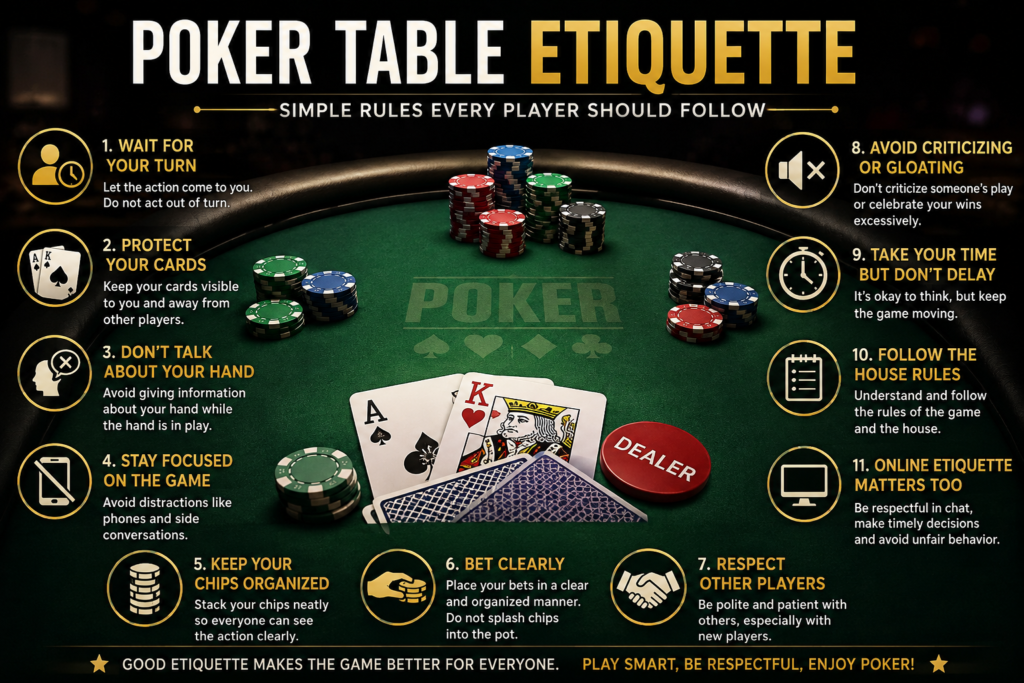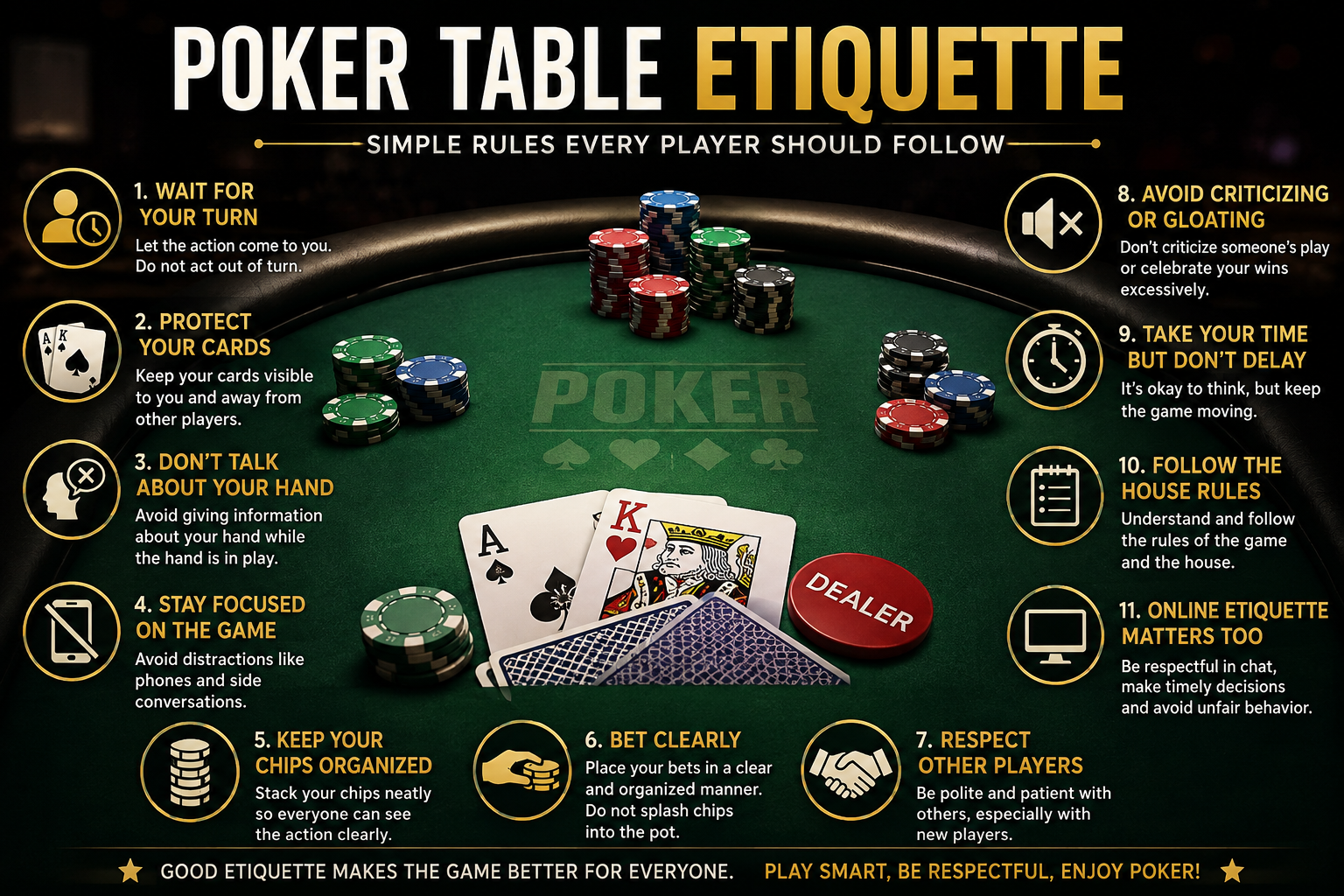
Poker is not only about knowing the cards or making the right move. The way you behave at the table also matters. Good poker table etiquette keeps the game smooth, helps everyone stay focused, and creates a better experience for both new and experienced players.
Whether you are learning How to Play Poker, joining a local game, or playing with an Online poker community, basic etiquette is something every player should understand.
This is especially useful for players exploring Poker in Gurgaon, including poker groups around Cyber City. From knowing when to act to keeping your cards protected, a few simple habits can make a big difference.
What Is Poker Table Etiquette?
Poker table etiquette means the basic behavior and unwritten rules that players should follow during a game.
These rules are not about winning or losing. They are about respecting the game and the people playing it.
Good etiquette includes:
- Acting when it is your turn
- Keeping your cards and chips organized
- Avoiding unnecessary distractions
- Respecting other players
- Paying attention to the action
- Avoiding comments about hands still in play
- Handling wins and losses calmly
- Following the agreed game rules
You do not need years of experience to follow these habits. Even texas holdem poker for beginners becomes easier when everyone understands basic table behavior.
1. Learn the Rules Before You Sit Down
The first rule of good etiquette is simple: know the basics before joining a game.
If you are still learning How to Play Poker, take some time to understand the format being played.
For Texas Hold’em, you should know:
- How the blinds work
- When players receive cards
- The order of betting
- The different betting actions
- The community cards
- Poker hand rankings
- How a winning hand is determined
You do not have to be an expert. But knowing the basic rules prevents unnecessary delays and confusion.
For texas holdem poker for beginners , learning the rules first also makes it easier to concentrate on the game instead of constantly asking what happens next.
2. Wait for Your Turn
One of the most important poker etiquette rules is to act only when it is your turn.
Do not announce your decision before the action reaches you. Avoid saying things such as:
- “I am definitely folding.”
- “I am going to raise.”
- “I have a strong hand.”
Even if you are joking, comments like these can influence other players.
Pay attention to the table and wait until the action reaches you before making your decision.
This simple habit is important in every poker game, whether you are playing with friends or participating in a more structured game.
3. Keep Your Cards Protected
Your cards should always remain easy to identify and protected from accidental exposure.
In a live game, keep your cards in front of you and avoid moving them around unnecessarily.
If you are playing with a physical poker game set, make sure the cards are placed properly and everyone can clearly see the community cards.
Never expose your hole cards during an active hand unless the rules specifically require it.
This is particularly important for beginners because accidentally showing a card can affect the action at the table.
4. Avoid Talking About Your Hand During Play
Talking about your cards while a hand is still active can create problems.
For example, if you fold and then tell another player that you had an ace, you may unintentionally give useful information about the cards that are no longer in play.
A better approach is to keep folded cards and private information to yourself until the hand is completely finished.
You should also avoid asking another player what they have while the hand is still going on.
5. Pay Attention to the Game
Poker requires concentration.
Checking your phone, having long side conversations, or ignoring the action can slow the table down.
You do not need to stare at every player. Just stay aware of:
- Whose turn it is
- The current bet
- The community cards
- The pot
- The action before you
This becomes even more important when playing in a busy environment such as a poker group around Poker Cyber City.
Being attentive helps you act faster and reduces mistakes.
6. Keep Your Chips Organized
Organized chips make a game easier to follow.
Keep your chip stacks visible and avoid mixing denominations unnecessarily.
If you are setting up a home game, arrange the chips before the game starts. A standard poker game set should ideally have enough chips for the number of players and the format being played.
Do not hide large-value chips behind smaller stacks. Other players should be able to get a reasonable idea of your stack size.
Clear chip organization also makes betting easier and avoids unnecessary confusion.
7. Do Not Splash Chips Into the Pot
When making a bet, place your chips clearly.
Throwing a pile of chips into the middle of the table can make it difficult to determine exactly how much you intended to bet.
Instead, make your betting action clear and follow the table’s agreed procedure.
If you are unsure about how a particular betting action works, ask before the hand starts rather than interrupting the game halfway through.
This is one reason learning How to Play Poker properly is useful before joining a regular table.
8. Respect New Players
Every experienced player was once a beginner.
If someone is learning texas holdem poker for beginners, they may take a little longer to make decisions or ask basic questions.
Good etiquette means giving them time to learn.
Experienced players can help by explaining rules when appropriate, without criticizing someone’s decisions or making the new player uncomfortable.
A friendly environment is also one of the reasons people join a poker community in the first place.
9. Avoid Criticizing Another Player’s Decision
One of the fastest ways to create tension at a poker table is to criticize someone’s play.
Comments like:
“How could you call that?”
or
“You should have folded.”
usually do not help anyone.
Poker involves incomplete information, and different players may make different decisions based on what they know.
Instead of criticizing another player’s move, focus on your own decisions.
You can discuss hands after the game if everyone is comfortable with the conversation.
10. Do Not Celebrate Another Player’s Loss
Winning a hand is exciting, but excessive celebration can make the table uncomfortable.
A simple reaction is enough.
Similarly, avoid making fun of someone after they lose a big pot. Poker has swings, and today’s winner may be tomorrow’s loser.
Good table manners mean being confident without being disrespectful.
This becomes especially important in a regular Online poker community or local poker group where the same players may meet repeatedly.
11. Avoid Unnecessary Slow Play
Taking time to think about an important decision is completely normal.
However, taking too long on every hand can slow the entire game.
Before your turn arrives, pay attention to the action so you already have an idea of what you might do.
For beginners, it is better to take a reasonable amount of time and make a thoughtful decision than to rush and make mistakes.
The goal is to maintain a comfortable pace for everyone.
12. Keep Conversations Appropriate
Friendly conversation can make a poker session more enjoyable, but timing matters.
Avoid loud conversations when another player is making an important decision.
Also avoid discussing unrelated topics so loudly that players cannot follow the action.
If you are playing Poker in Gurgaon with a regular group, being respectful and easy to play with can be just as important as your poker knowledge.
13. Follow the House Rules
Every poker game may have slightly different procedures.
Before the game begins, understand the agreed rules about:
- Betting
- Minimum raises
- Rebuys, if applicable
- Seating
- Dealing
- Handling exposed cards
- Ending a hand
- Disputes
Do not assume that every table follows exactly the same procedure.
If you are unsure, ask the dealer or organizer.
Following the rules consistently keeps disagreements to a minimum.
14. Understand Online Poker Etiquette
Poker etiquette also matters when playing online.
An Online poker community has its own set of expectations.
For example:
- Do not use abusive language in chat.
- Avoid intentionally delaying your decisions.
- Do not reveal information about another player’s hand.
- Avoid unnecessary spam.
- Respect other players.
- Keep your internet connection stable when possible.
- Do not discuss an active hand in a way that influences other players.
Online play may feel less personal, but there are still real people on the other side of the table.
Good behavior matters in both live and online poker.
Step-by-Step: How to Set Up a Friendly Poker Game
If you are organizing a home session, use this simple checklist.
Step 1: Choose the format
Decide whether everyone will play Texas Hold’em or another agreed format.
Step 2: Prepare the equipment
Set up your cards, chips, dealer button, and table.
A good poker game set can make preparation much easier.
Step 3: Explain the rules
Make sure everyone understands the basic betting structure before starting.
Step 4: Decide the seating
Give every player a comfortable place at the table.
Step 5: Explain table etiquette
Remind everyone to wait for their turn, protect their cards, and avoid discussing active hands.
Step 6: Start slowly
Especially with beginners, take a few hands to make sure everyone understands the process.
Step 7: Keep the atmosphere friendly
The best games are competitive without becoming uncomfortable.
Common Poker Etiquette Mistakes to Avoid
Here are some mistakes that beginners should watch out for:
Acting out of turn: It can influence other players.
Showing folded cards: It can reveal information about the hand.
Talking about active hands: It may affect decisions.
Ignoring the action: It slows the table.
Criticizing other players: It creates an uncomfortable environment.
Messy chip stacks: They make bets harder to understand.
Arguing over small mistakes: Ask the dealer or organizer to clarify the rule instead.
Avoiding these habits will make you a much easier player to have at the table.
Frequently Asked Questions
Is poker etiquette important for beginners?
Yes. Learning basic etiquette alongside How to Play Poker helps beginners feel more comfortable and prevents common mistakes.
What is the most important poker table rule?
Always pay attention and wait for your turn before acting. It keeps the game fair and organized.
What should beginners know about Texas Hold’em?
For texas holdem poker for beginners, start with hand rankings, betting rounds, positions, blinds, and the basic order of play.
What should I include in a poker game set?
A basic poker game set normally includes playing cards and poker chips. A dealer button can also be useful for home games.
Does etiquette matter in an Online poker community?
Yes. Respectful communication, timely decisions, and avoiding disruptive behavior are important in any Online poker community.
Where can I learn and play poker around Gurgaon?
Players interested in Poker in Gurgaon can explore local poker communities and groups, while checking the game format, rules, and suitability for their experience level.
Final Thoughts
Good poker table etiquette is simple: pay attention, wait your turn, respect other players, follow the rules, and keep the game enjoyable.
Whether you are learning How to Play Poker, exploring texas holdem poker for beginners, setting up a poker game set, or meeting players through an Online poker community, these habits will always be useful.
For players interested in Poker in Gurgaon, including areas such as Poker Cyber City, understanding etiquette can help you enter a new poker environment with confidence.
Poker is a game of decisions, but it is also a social experience. Playing well matters, but being someone others enjoy playing with matters too.